It's 11:47pm on a Sunday. The furnace stops. The house is already getting cold. A homeowner Google's "furnace repair emergency" and finds four companies. They call the first one. It rings once, twice, and someone picks up.
"Your heating's out? We can be there in forty minutes. Your address?"
By the time the second company's voicemail finishes, the first company is already booked, already on the way, and already getting a five-star review written in someone's head.
This isn't about luck or timing. It's about structure.
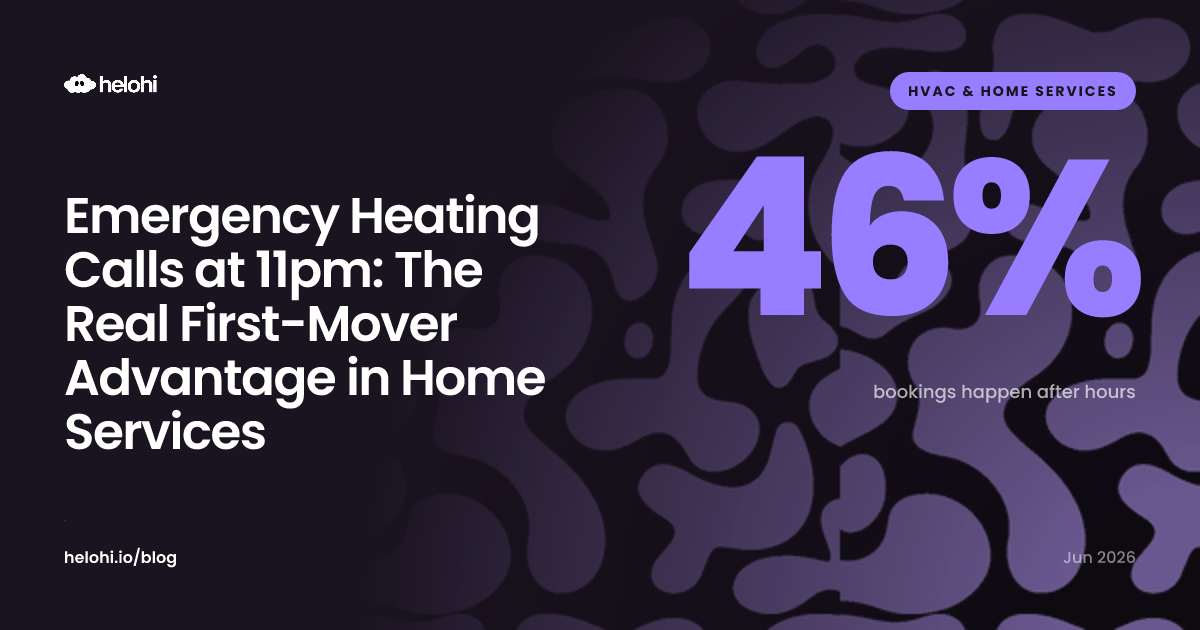
That stat alone changes how emergency services work. Almost half of all appointments get booked after you're supposed to be off the clock. Cold furnace, broken AC, leak in the water line. These don't wait for business hours. They happen when they happen.
If your phone still goes to a voicemail box after 5pm, you're giving away nearly half your market. And not the small half. The emergency half. The half that's willing to pay a premium because they need someone now.
The homeowner doesn't think about any company's infrastructure. They just know they're cold, they called someone, and that person either helped or didn't. First to answer wins. Everything else is secondary.
Emergency calls also tend to lead to maintenance plans. A homeowner who gets their furnace fixed at midnight on a Sunday by someone who picked up their phone is going to remember that. They're going to call the same person next fall for a tune-up. And the year after that. That first emergency call becomes years of regular work from one customer.
helohi operates 24/7. It picks up your phone when you're asleep, when you're with another customer, when you're at dinner. It gets the details, locks in the appointment, and texts the customer a confirmation before they hang up. They know someone's coming. You wake up to a job already booked.
Emergency call comes in | picked up instantly Customer booked | appointment confirmed by text You respond | customer is already waiting
The competitive advantage here is pure speed. The second-fastest response is too slow. You either picked up the phone or you didn't. This isn't about being better at HVAC work. This is about being there when someone needs you.
In a market where emergency calls make up nearly half the work, being available for those calls isn't a nice feature. It's the game itself.
That's why the math is brutal: 80% of callers who hit voicemail never call back. The customer isn't going to wait and call back later. They're going to call three other numbers until someone picks up. By the time you check your voicemail, they're already committed to someone else.
This creates a cascading advantage. The shop that answers emergency calls gets the emergency jobs. Those emergency customers stay loyal. They book maintenance. They refer friends who had emergencies. Meanwhile, the shops that miss emergency calls are left scraping together off-peak work from the customers nobody else wanted.
It doesn't have to be that way. You can own emergency calls without building a team around them.
The HVAC business is seasonal. Winter is busy, spring is quiet, summer is slammed. But the emergency calls are constant. They happen all year, all hours. The shop that answers them consistently is the shop that survives the slow months.
Being the first to answer isn't clever. It's not a differentiator that takes years to build. It's just physics. The person the customer reaches is the person they hire. If that's you, you win the job. If it's not, you lose it.
If you want those 11pm calls to go to you instead of your competitors, start at helohi.io/get-started.