A walk-in shows up at your door at 6:45 PM. You're closed. They try the door anyway. They see a sign with your hours and a phone number. They call. Voicemail.
Now they're standing on the sidewalk, phone to their ear, listening to a recording. They could leave a message, wait for you to call back in the morning, and hope you still have the slot they want open. Or they could just walk next door to the other studio that answers.
Most people walk next door.
Walk-ins used to be a guaranteed booking. Someone found you, made an effort to visit, and was ready to commit. But that advantage disappears if you can't capture them on the spot. After-hours inquiries are even worse. A client thinking about their weekend at 7 PM doesn't want to wait until 9 AM Tuesday to find out if Thursday is open. They want an answer that night, and they want it while they're still in booking mode.
The two channels (walk-ins plus after-hours phone traffic) are where a lot of potential revenue lives untapped.
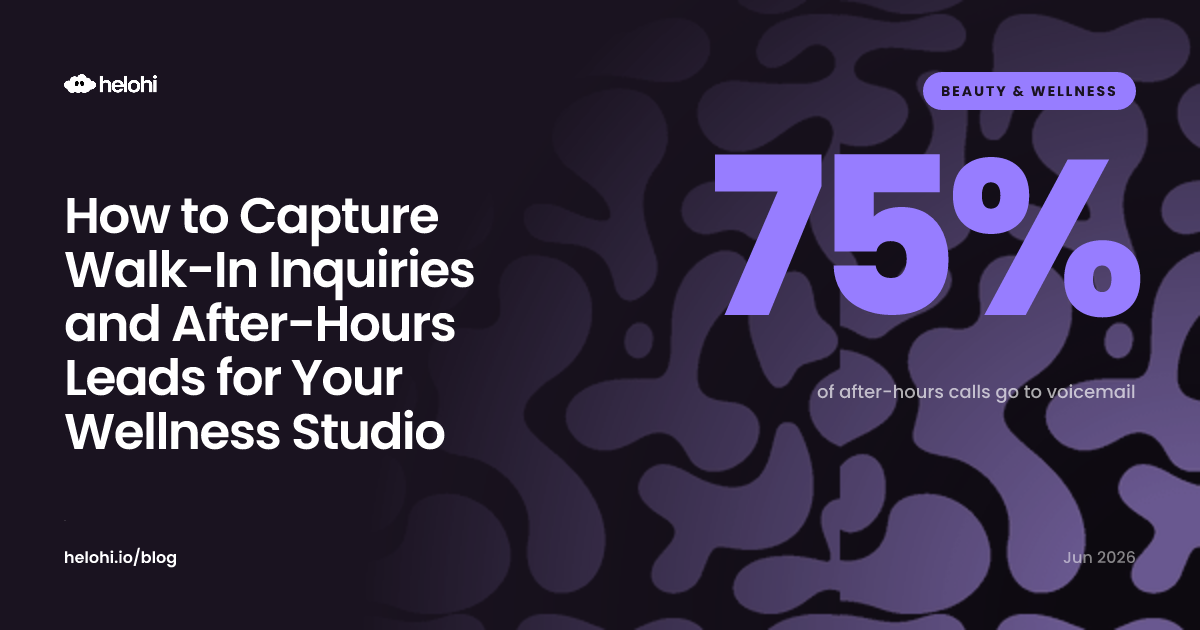
That's most of your evening and weekend inquiry traffic vanishing into a black hole. Some of it will call back during business hours. Most won't.
The traditional approach is hiring someone to cover evenings, or having the owner work nights. That's expensive and it burns out the owner. The better option is making sure something answers the phone whether you're there or not.
helohi is trained on your business and your availability. When an after-hours call comes in, an agent picks up. It asks what the client is looking for, checks your actual calendar, and books the appointment right there. No morning phone calls to confirm. No missed slots. No callback-and-hope.
A walk-in who can't find you in person can still reach you by phone. The agent answers, gets their request, and locks them in. When they hang up, they have a confirmation text. The next morning, you see they're already on your schedule.
Walk-in at closing time | no one there to book them After-hours caller | hits voicemail, moves on Client booked with agent | confirmed in real time, on your calendar
The setup matters too. Your agent is trained on your specific services, pricing, cancellation policy, and any preferences your clients should know about (deposit requirements, minimum service length, etc.). When someone books, they get accurate information from the start. No surprises, no confusion.
The calendar integration is key. Your agent checks your real availability in real time. Double-booking is impossible. If you update hours or open a new service, your agent knows about it within minutes. You don't have to manually update anything.
After-hours call comes in | agent answers in seconds Walk-in can still book | by phone if the door is closed Agent checks your calendar | accurate, real-time availability Booking is confirmed instantly | client gets text confirmation
The ROI is straightforward. Each recovered after-hours booking is a client you wouldn't have had otherwise. In a studio that's open 9-6 most days, that after-hours window (6 PM-9 AM) is where you're losing the most traffic. If you capture just one or two extra bookings from that time slot each week, the agent pays for itself.
And the walk-in conversion is pure upside. Those people were already at your door. They were ready to commit. You're not creating demand. You're just not letting it fall through the cracks.
The integration is simple. Your calendar syncs automatically. When a booking comes in, it appears on your schedule. You can set preferences about deposit amounts, service minimums, or which clients need manual approval. Everything else is automatic.
The wellness studios capturing this traffic aren't more efficient or better staffed than the ones losing it. They just stopped letting evening calls and walk-in inquiries disappear.
If you want to start capturing after-hours and walk-in leads, start at helohi.io/get-started.