Your phone rings. A customer is ready to book. They found you on Google. They trust the reviews. They want to come in today. And then something happens and they hang up.
You never even knew they called.
This isn't about the quality of your work or your pricing. This is about the first 10 seconds. Before you even have the chance to say hello, something in your system breaks the connection.
For an auto repair shop, that statistic is a wall. You're running the shop, your tech is under a car, your office person is trying to manage walk-ins, and the phone is ringing. Someone picks up on the fourth ring. Someone doesn't pick up at all. The customer hears voicemail.
But the problem starts earlier than the ring. It starts with the customer's expectations when they dial.
One: Your number isn't where they expect it. They found you on Google. Google shows a number. They call it. It rings to someone's personal cell. It sounds confused. Is this the shop or a driver? They hang up. You lost them. The fix is simple. Get a dedicated business line, not a personal cell routed to voicemail. Make it the number on Google, on your website, on your door. Make it feel intentional.
Two: Nobody answers because it rings to the wrong place. Your phone system is a mess. Calls might ring in the shop, might ring in the office, might ring someone's phone in the back. Fifty percent of the time it rings the wrong person. That person fumbles the answer, says "hold on," and the customer waits. Waiting on a tow shop call is weird. They already called because they're in a breakdown. Long holds feel like abandonment. Make sure calls ring where someone is actually listening.
Three: Your voicemail doesn't give them a path forward. They reach voicemail. Your message says "Please leave a message." That's it. No callback window. No email option. No mention of an emergency number if they can't wait. They think, "I'm broken down. I can't wait 3 hours for someone to call back." They hang up and call the next shop. The fix: tell them exactly when you'll call back. Tell them they can text. Give them an emergency number. Give them an escape route so they don't take it.
Four: Your hours are wrong on Google. They call at 8pm because Google says you're open until 9pm. Your Google hours say 8pm-6pm instead of 8am-6pm. They get voicemail, frustrated. The information was wrong. The mistake wasn't theirs. They move on. Google hours are the most-checked piece of information about your business. Keep them current. If you're closed, say so clearly. If you take emergency calls after hours, say that too.
Five: Calling feels complicated. You have three phone numbers on your website. One's for scheduling, one's for roadside assistance, one's for general questions. A customer needs a tow. They don't know which number to call. They call the wrong one. They get bounced around. They hang up. Simplify it. One number. Let people figure it out from there. Routing them between numbers is friction.
Six: You keep them waiting with no explanation. They finally reach a human. "Hold on, I'm putting you through to dispatch." Twenty seconds of silence. They think the call dropped. They hang up. Give them something while they wait. Tell them what's happening. "I'm connecting you to dispatch, this takes a few seconds." Thirty seconds of quiet feels abandoned. Thirty seconds with someone explaining feels like progress.
Seven: You sound unprepared when you answer. "Yeah?" instead of "Thank you for calling Smith Auto Repair, how can I help?" Sounds like you're not expecting them. Sounds like you don't want the call. Sounds like maybe you're not even the repair shop. The first few words shape everything. You don't need to be fancy. Just sound like someone who expected the call and is happy to help.
Here's what's happening under the surface. When someone has a breakdown, they're stressed. They're calling shops they found on Google. They have about 30 seconds to decide if you're the right place. If you stumble in those 30 seconds, you're done.
It's not that you're not good at fixing cars. It's that the customer never makes it far enough into the relationship to find that out. They bounce off before the conversation even starts.
Customer finds you | on Google or a referral Customer calls | your phone system needs to work here Someone answers or | voicemail tells them what to do next Details are collected | so they feel heard You either book them | or they move to someone else
The good news is that almost every point of failure is fixable. It doesn't cost money. It costs attention.
Get a dedicated business line. Put it everywhere. Make sure it rings to someone ready to help. Write down what you say when you answer. Check your Google hours weekly. Tell customers what to expect. Give them options. Sound ready.
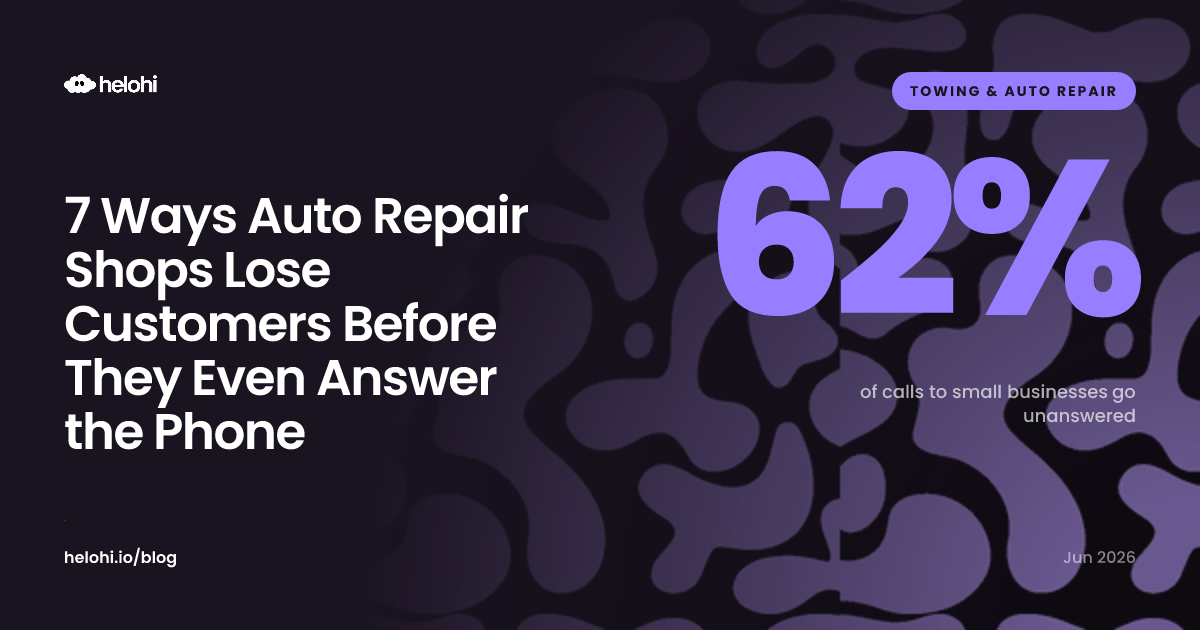
A shop that gets the fundamentals right loses fewer customers to voicemail and bad first impressions. That's not a small thing. In a market where 62% of calls go unanswered, being the shop that always answers is a competitive advantage.
You probably already have customers who will repair their cars with you. The problem isn't product. The problem is you don't know they called because something broke the connection before it could happen.
Fix the seven things above, and you'll notice something strange. More people will reach you. More of the people who reach you will book. More of them will come back. It won't fix everything, but it'll fix the silent crisis where 62% of your incoming calls are just disappearing.
The customers you're not hearing from are the ones you need to start listening to.